ACADEMIC WRITING SAMPLE ANSWERS

Academic Writing Sample Answers Practice 12 Test 02

This original practice page includes Task 1 (Process Diagram) and Task 2 (Advantages and Disadvantages Essay), with Band 9, Band 8, and Band 7 sample answers for IELTS preparation.
Academic Writing Task 1

Task 1 · Process Diagram

Task 1 Prompt

You should spend about 20 minutes on this task. Write at least 150 words.

The diagram below illustrates the main stages used in one patent system to process an application, from initial filing to a decision to grant or reject the patent.

Summarise the information by selecting and reporting the main features.
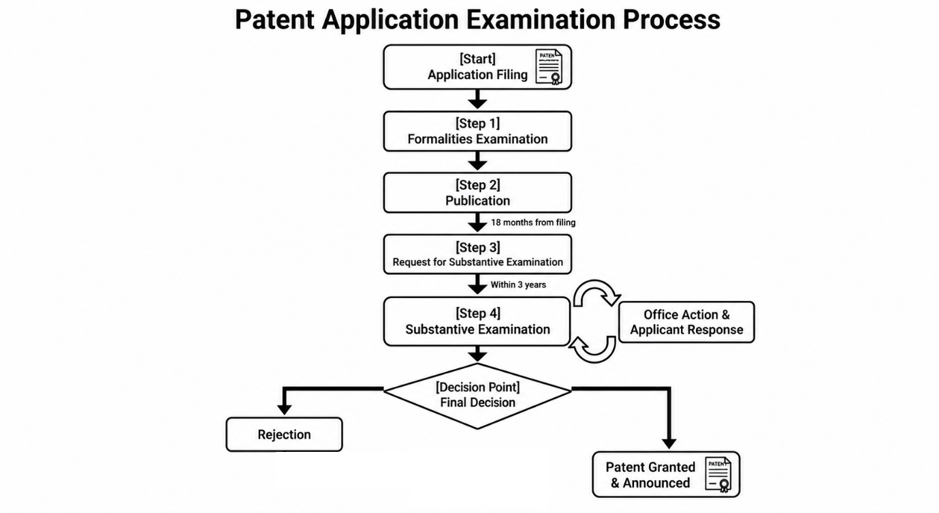
Academic Writing Task 1 Process Diagram practice image
BAND 9

Part 1 · Band 9 Sample Answer

The diagram outlines the procedure followed by a patent authority when examining an application, beginning with its submission and ending with either rejection or the granting and announcement of a patent.

Overall, the system comprises four principal stages before a final decision is reached: a formalities check, publication, a request for substantive examination and the substantive assessment itself. While the first three stages follow a straightforward sequence governed by two time limits, the substantive examination may involve a repeated exchange between the patent office and the applicant. The process ultimately divides into two possible outcomes.

Initially, an application is filed and then undergoes a formalities examination to establish whether the required procedural conditions have been satisfied. It is subsequently published, with publication taking place 18 months after the original filing. The applicant must then request a substantive examination within three years. Once this request has been made, the application advances to the fourth stage, in which its substance is assessed by the patent office.

During this assessment, the office may issue an official action raising matters that require clarification or amendment. The applicant provides a response, after which the case returns to substantive examination. This cycle can therefore continue as necessary before a conclusion is reached. At the final decision point, the application follows one of two branches. An unsuccessful application is rejected and leaves the process, whereas a successful one results in the patent being formally granted and announced.

BAND 8

Part 1 · Band 8 Sample Answer

The process diagram shows how a patent application is handled from the time it is filed until the authority makes a final decision to reject it or award a patent.

Overall, there are four numbered stages in the examination procedure. Applications first pass through checks and publication before a detailed examination is requested and carried out. A notable feature is that the final examination can include a cycle of communication between the office and the applicant. The procedure finishes with one of two contrasting results: rejection or the granting and public announcement of the patent.

The process begins when an applicant files the necessary documents. The patent office then conducts a formalities examination as the first stage. Once this has been completed, the application is published at Step 2, which occurs 18 months after filing. The applicant is subsequently required to submit a request for substantive examination within three years. This leads to Step 4, where the contents of the application are examined in detail.

The substantive examination is not necessarily completed in a single round. The patent office may send an office action to the applicant, who must provide a response. The application then returns to the examination stage, meaning that this exchange can be repeated before a final judgement is possible. Following the final decision, the route divides. If the application does not meet the relevant requirements, it is rejected. If it is approved, the patent is granted and the decision is announced.

BAND 7

Part 1 · Band 7 Sample Answer

The diagram describes the stages involved in examining a patent application. It covers the whole procedure from the filing of an application to either its rejection or the granting of a patent.

Overall, the application goes through four main steps before a final decision is made. These consist of a formalities examination, publication, a request for a detailed examination and the substantive examination itself. There may also be repeated communication between the patent office and the applicant during the fourth stage. In the end, the patent is either refused or granted and announced.

First, the applicant files the patent application. It then enters Step 1, where a formalities examination is carried out. After this check, the application is published in the second stage. The diagram indicates that this happens 18 months after the filing date. The next step requires the applicant to request a substantive examination within three years. The patent office then begins Step 4 and examines the application in greater detail.

During the substantive examination, the office can issue an office action, and the applicant is given an opportunity to respond. After the response is received, the application returns to the substantive examination stage. This cycle may take place before the authority is ready to reach its final decision. At the decision point, an unsuccessful application follows the left-hand route and is rejected. In contrast, an application that is accepted follows the other route, after which the patent is officially granted and announced.

Academic Writing Task 2

Task 2 · Advantages and Disadvantages Essay

Task 2 Prompt

You should spend about 40 minutes on this task. Write at least 250 words.

Write about the following topic:

To reduce urban air pollution and traffic congestion, some city governments have introduced or proposed policies such as creating low-emission zones, where highly polluting vehicles are banned, and banning petrol and diesel cars in the future.

Do the advantages of such policies outweigh their disadvantages?

Give reasons for your answer and include any relevant examples from your own knowledge or experience.

BAND 9

Part 2 · Band 9 Sample Answer

Policies that exclude heavily polluting vehicles from urban areas and eventually end the use of new petrol and diesel cars are intended to improve both air quality and mobility. Although these measures can impose substantial costs on households and businesses, I believe their advantages outweigh the disadvantages, provided that cities introduce them gradually and offer credible alternatives to private car use.

The most compelling benefit is better public health. Road traffic releases pollutants close to where large numbers of people live, work and attend school. Restricting the dirtiest vehicles can therefore reduce exposure in densely populated neighbourhoods, particularly among children, older people and those with respiratory conditions. A future ban also gives manufacturers and consumers a clear timetable for moving towards cleaner technology, rather than relying on voluntary change. In addition, charging or excluding certain vehicles can discourage unnecessary journeys. If the revenue is invested in reliable buses, rail services and safe cycling routes, some commuters will leave their cars at home, easing congestion as well as emissions. Quieter streets and more predictable journey times would benefit residents and local businesses alike.

Nevertheless, poorly designed restrictions can be inequitable. A relatively wealthy driver may replace an older car immediately, whereas a low-income worker may depend on one because housing near the workplace is unaffordable or public transport is inadequate. Small firms operating vans or delivery vehicles may face similar financial pressure. There are also practical limits to the environmental case: manufacturing replacement vehicles consumes resources, and electric cars still occupy road space. Consequently, replacing every conventional car with an electric one would improve local air quality but would not, by itself, eliminate traffic jams.

These drawbacks call for careful implementation rather than abandonment. Governments should announce deadlines well in advance, tighten standards in stages and provide targeted grants or affordable leasing for households and small businesses genuinely unable to switch. Exemptions may be justified temporarily for disabled drivers and essential services. Most importantly, restrictions should form part of a broader transport strategy that improves suburban and late-night services and makes walking and cycling realistic options. Such measures distribute the cost more fairly while reducing the total number of cars.

In conclusion, low-emission zones and the eventual withdrawal of petrol and diesel vehicles can create healthier, quieter and more efficient cities. The transition will be expensive for some groups and cannot solve congestion through technology alone. Even so, with phased rules and serious investment in alternatives, the lasting public benefits are greater than the manageable short-term disadvantages.

BAND 8

Part 2 · Band 8 Sample Answer

Many cities are considering low-emission zones and future restrictions on petrol and diesel cars in response to polluted air and crowded roads. These policies may create financial and practical difficulties, especially during the transition. However, I believe the overall advantages are greater because cleaner air and a better transport system can benefit the entire urban population for many years.

One major advantage is the reduction of harmful exhaust emissions in places where many people are exposed to them. Banning the most polluting vehicles from central districts can quickly improve the local environment around homes, offices and schools. This is particularly important for people who suffer from breathing problems. Future bans can also encourage car manufacturers to invest in cleaner vehicles and give consumers a reason to consider electric cars or public transport. Moreover, restrictions may reduce congestion if some drivers decide to travel by bus, train, bicycle or on foot. Fewer vehicles would mean less noise, safer streets and shorter delays for buses and necessary deliveries.

On the other hand, these policies can be costly and unfair if they are introduced too rapidly. People with lower incomes often own older vehicles and may be unable to afford an electric replacement. Some workers also travel at times or from areas where public transport is limited. Small companies could face high expenses when replacing vans, and these costs might be passed on to customers. Furthermore, electric vehicles are not a complete answer to congestion because they require the same amount of road and parking space as conventional cars. Producing large numbers of new vehicles also has an environmental cost.

Despite these concerns, most disadvantages can be reduced through sensible planning. Cities should introduce stricter rules in stages rather than applying them without warning. Financial support could be directed towards low-income drivers and small businesses, while temporary exemptions could protect people with special mobility needs. At the same time, governments must expand frequent and affordable public transport beyond city centres. Park-and-ride facilities and safer cycle lanes would give commuters practical choices instead of simply punishing them for driving.

In conclusion, restrictions on polluting vehicles involve real costs and may cause hardship if alternatives are unavailable. Nevertheless, their long-term contribution to public health, cleaner streets and more sustainable travel outweighs these problems. A gradual and fair transition is therefore preferable to allowing urban pollution and congestion to continue unchecked.

BAND 7

Part 2 · Band 7 Sample Answer

Some city authorities have created low-emission areas and plan to ban petrol and diesel cars in the future. These measures can reduce pollution and encourage people to use other forms of transport, but they can also create costs for drivers and businesses. In my view, the advantages outweigh the disadvantages if the changes are introduced gradually and public transport is improved.

The main benefit is that city residents would breathe cleaner air. Older petrol and diesel vehicles produce exhaust fumes in busy areas where many people live and work. Preventing the most polluting cars from entering these places can therefore improve the urban environment and may reduce health problems linked to poor air quality. Such policies can also encourage people to choose buses, trains, cycling or walking instead of driving. If fewer cars enter city centres, roads may become less congested, buses can move more quickly and streets can become quieter. A future ban may also encourage companies to develop cleaner vehicles and charging facilities.

However, these rules have several disadvantages. Buying a new electric car is expensive, and people on lower incomes may not be able to replace an old vehicle. This can be unfair when they need a car to reach work, particularly if they live outside the city or work late at night. Small businesses may also have to replace delivery vans before they are ready, increasing their operating costs. In addition, electric cars do not solve every transport problem. Although they create no exhaust fumes while being driven, they still contribute to traffic congestion and require parking spaces. Building the vehicles and producing electricity also have environmental effects.

I believe these problems can be managed. Governments should give drivers several years to prepare for a ban and offer financial help to low-income families and small firms. They should also provide temporary exemptions for people who have no reasonable alternative. More importantly, cities need frequent, affordable buses and trains, including services in outer areas and at night. Safe cycle routes and convenient park-and-ride facilities would provide further choices. With these improvements, fewer residents would need to purchase another car at all.

In conclusion, low-emission zones and future bans may be expensive and inconvenient for some people. Even so, cleaner air, improved public health and less car use are more important long-term benefits. Careful planning can reduce the disadvantages and make the transition fairer.

FREE PRACTICE RESOURCES

Download the IELTS Practice PDF Pack.

Get Listening, Reading, and Writing practice materials for self-study. Use a computer to download the 1.9GB pack.

Download PDF Pack
Chat History
My Notes