ACADEMIC WRITING SAMPLE ANSWERS

Academic Writing Sample Answers Practice 19 Test 02

This original practice page includes Task 1 (Static Mixed Chart) and Task 2 (Agree or Disagree Essay), with Band 9, Band 8, and Band 7 sample answers for IELTS preparation.
Academic Writing Task 1

Task 1 · Static Mixed Chart

Task 1 Prompt

You should spend about 20 minutes on this task. Write at least 150 words.

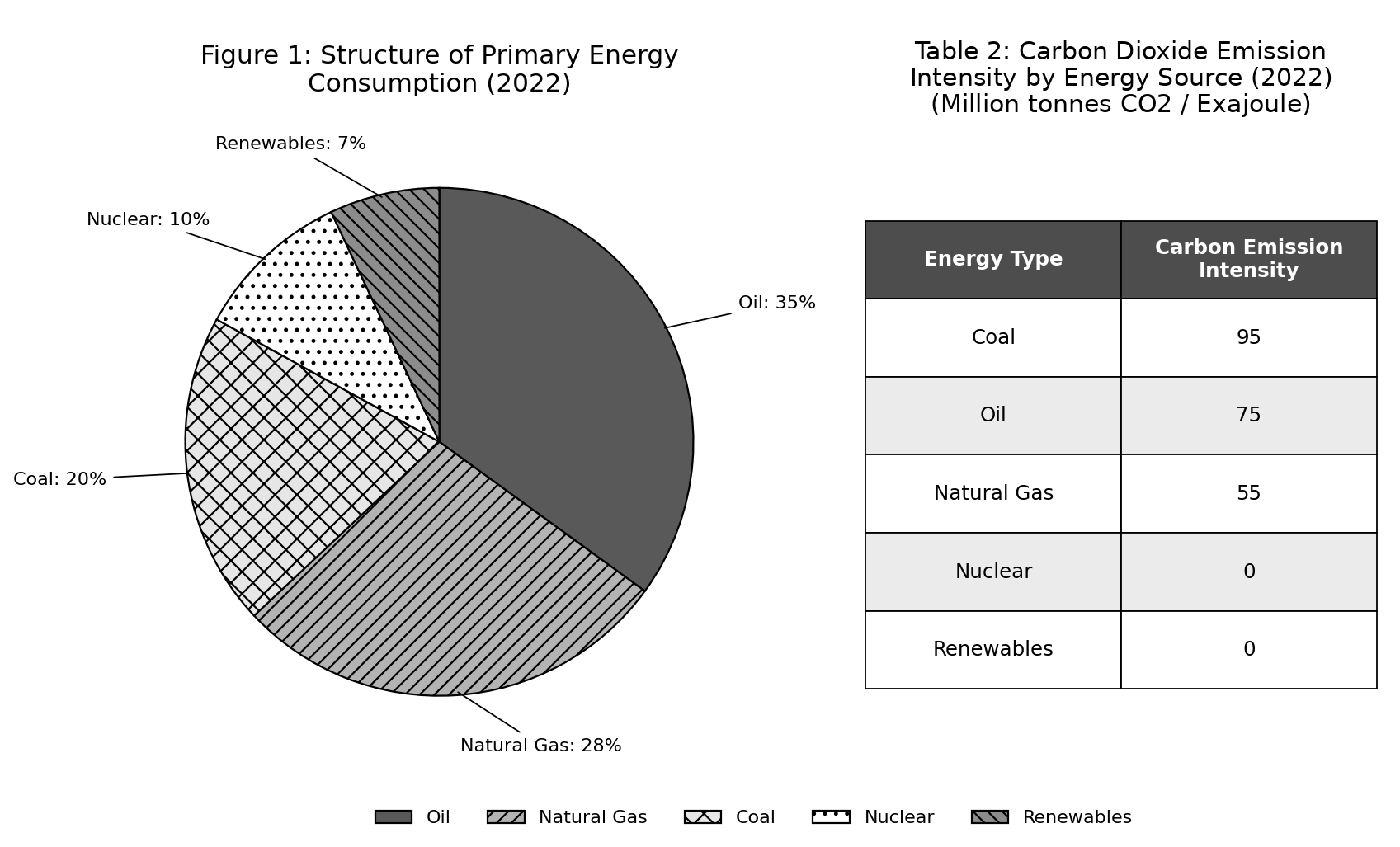
The pie chart and table below show primary energy consumption by source and the carbon dioxide emission intensity of each source in a country in 2022.

Summarise the information by selecting and reporting the main features, and make comparisons where relevant.
Academic Writing Task 1 Static Mixed Chart practice image
BAND 9

Part 1 · Band 9 Sample Answer

The pie chart illustrates the composition of primary energy consumption in a country in 2022, while the table compares the carbon dioxide emission intensity of the five energy sources, measured in million tonnes of CO2 per exajoule.

Overall, fossil fuels overwhelmingly dominated the energy mix, collectively supplying 83% of primary energy. All three were associated with substantial carbon intensity, although the order of their consumption shares differed from their ranking by emissions. By contrast, nuclear power and renewables together accounted for the remaining 17% and recorded no carbon dioxide emissions per unit of energy.

Oil was the largest single source, providing 35% of the country’s primary energy. Natural gas ranked second at 28%, seven percentage points below oil, while coal supplied a further 20%. Among the two non-fossil sources, nuclear power represented 10% of consumption, whereas renewables had the smallest share, at just 7%.

The emissions data present a somewhat different hierarchy. Coal was the most carbon-intensive source, producing 95 million tonnes of CO2 per exajoule, despite ranking only third in consumption. Oil had the second-highest intensity, at 75 million tonnes, while natural gas recorded the lowest figure among the fossil fuels, at 55 million tonnes. Thus, coal’s intensity exceeded that of gas by 40 million tonnes per exajoule and that of oil by 20 million tonnes. Nuclear energy and renewables both had values of zero, sharply distinguishing them from the three sources that dominated overall consumption.

BAND 8

Part 1 · Band 8 Sample Answer

The pie chart shows the percentages of primary energy obtained from five sources in a country in 2022. The accompanying table gives the carbon dioxide emission intensity of each source in million tonnes of CO2 per exajoule.

Overall, oil, natural gas and coal provided the great majority of the country’s energy, with a combined share of 83%. These fossil fuels all produced carbon dioxide, while nuclear power and renewables had an emission intensity of zero. Oil was the most widely consumed source, but coal had the highest emissions per unit of energy.

Oil accounted for 35% of primary energy use, making it the largest category. Natural gas was the second most important source at 28%, followed by coal at 20%. The remaining energy came from nuclear power and renewables, whose shares stood at 10% and 7% respectively. Therefore, the use of oil alone was twice as high as the combined proportion of the two zero-emission sources, which totalled 17%.

In terms of emission intensity, coal recorded the highest figure, at 95 million tonnes of CO2 per exajoule. This was 20 million tonnes above the level for oil, at 75 million tonnes. Natural gas had a lower intensity than the other fossil fuels, producing 55 million tonnes per exajoule, although it was still the second-largest part of the energy mix. In clear contrast, both nuclear power and renewable energy registered no carbon dioxide emissions according to the table, despite together supplying less than one fifth of total consumption.

BAND 7

Part 1 · Band 7 Sample Answer

The pie chart compares the proportions of five sources used for primary energy in a country in 2022, and the table shows their carbon dioxide emission intensity in million tonnes of CO2 per exajoule.

Overall, most of the country’s energy came from fossil fuels. Oil was the largest energy source, followed by natural gas and coal. However, coal produced the most carbon dioxide per unit of energy. Nuclear power and renewables made up much smaller shares and both had zero emission intensity.

Oil supplied 35% of primary energy, while natural gas accounted for 28%. Coal was the third-largest source, representing one fifth of total consumption. Together, these three fossil fuels provided 83% of the country’s energy. Nuclear power contributed 10%, and renewables had the smallest proportion at 7%. The two sources with no carbon dioxide emissions therefore provided a combined total of only 17%.

Coal had an emission intensity of 95 million tonnes of CO2 per exajoule, which was the highest value in the table. Oil ranked second for emissions, with a figure of 75 million tonnes per exajoule. Although natural gas was used more than coal, its emission intensity was considerably lower, at 55 million tonnes. This was 40 million tonnes below coal and 20 million tonnes below oil. In comparison, the values for both nuclear power and renewable energy were zero, creating a clear difference between these sources and the fossil fuels.

Academic Writing Task 2

Task 2 · Agree or Disagree Essay

Task 2 Prompt

You should spend about 40 minutes on this task. Write at least 250 words.

Write about the following topic:

Some people believe that manufacturers, rather than consumers, should be mainly responsible for reducing the environmental damage caused by everyday products.

To what extent do you agree or disagree?

Give reasons for your answer and include any relevant examples from your own knowledge or experience.

BAND 9

Part 2 · Band 9 Sample Answer

Everyday goods create environmental harm at several stages, from extracting raw materials to disposal. I largely agree that manufacturers should bear the principal responsibility for reducing this damage because they determine how products are designed and produced, and they possess far more information and leverage than individual buyers. Consumers still have an important supporting role, but they cannot transform production systems alone.

Manufacturers make the earliest and most consequential choices. They decide whether a device can be repaired, whether packaging is excessive, which chemicals enter a cleaning product and whether materials can be recovered after use. Once an item reaches a shop, the consumer can only choose among the options already created. For example, a customer cannot remove an unnecessarily bonded battery from an electronic device or redesign mixed-material packaging so that local facilities can recycle it. A producer, however, can address such problems across millions of units through a single change in design. The scale of this influence justifies placing primary responsibility on the company.

Businesses are also better positioned to assess and manage impacts throughout complicated supply chains. A shopper rarely knows how a cotton garment was dyed, how factory waste was treated or how far each component travelled. Manufacturers can require suppliers to meet environmental standards, measure emissions and replace damaging processes. They can also finance collection and recycling schemes through extended producer responsibility, incorporating end-of-life costs into product prices instead of leaving municipalities and households to deal with the waste.

Nevertheless, assigning manufacturers the main burden should not excuse careless consumption. People can reduce demand for disposable goods, maintain products for longer and sort waste correctly. Their purchasing decisions also reward firms that offer durable and lower-impact alternatives. Yet relying mainly on consumer choice is unrealistic: environmental labels may be confusing, greener products can be unavailable or expensive, and advertising can encourage frequent replacement. Government intervention is therefore needed to set minimum durability standards, prohibit deceptive environmental claims and ensure that responsible firms are not undercut by competitors avoiding these costs.

In conclusion, consumers should use products thoughtfully, but manufacturers should carry the greater responsibility because they control design, sourcing and production at scale. Clear regulation can make that responsibility enforceable, while informed consumer behaviour can strengthen its effects.

BAND 8

Part 2 · Band 8 Sample Answer

I agree to a great extent that manufacturers should be mainly responsible for limiting the environmental damage associated with common products. Although consumers influence demand and must dispose of goods responsibly, producers control most decisions about materials, manufacturing, packaging and product life.

The strongest argument for placing responsibility on manufacturers is their control over design. Before consumers see a product, a company has already decided how much raw material it contains, whether it can be repaired and how it will be packaged. These choices can either prevent waste or make it unavoidable. For instance, if a manufacturer seals a phone in a way that makes the battery difficult to replace, owners may have to discard the whole device when one component fails. Designing it for repair would reduce waste for every customer, creating a much larger benefit than asking individuals to recycle more carefully.

Manufacturers also have access to information that consumers cannot reasonably obtain. They know which factories supply their components and what processes are used, so they can demand cleaner production and avoid environmentally harmful materials. Most shoppers cannot investigate an entire supply chain before buying a shirt, household cleaner or food container. Producers should therefore publish reliable environmental information and take back products or packaging at the end of their useful lives. This would make the organisations that profit from sales help manage the resulting waste.

Consumers are not free of responsibility. They should avoid unnecessary purchases, choose durable items when possible, reuse products and follow local recycling instructions. Demand for environmentally preferable goods can encourage companies to improve. However, consumers can choose only from what is available and may struggle to compare vague claims such as green or natural. Furthermore, sustainable options sometimes cost more, preventing lower-income households from selecting them.

For this reason, governments should support manufacturer responsibility through rules on recyclability, hazardous substances and truthful labelling. Such standards would prevent less responsible companies from gaining an unfair price advantage.

Overall, consumers have a meaningful role in reducing waste, but manufacturers should shoulder the main responsibility. Their control over product design and supply chains allows them to prevent environmental damage before it reaches the consumer.

BAND 7

Part 2 · Band 7 Sample Answer

I largely agree that manufacturers should have more responsibility than consumers for reducing the environmental harm caused by everyday products. Companies control how goods are made and packaged, while customers can normally choose only from the products offered to them. However, consumers must also change some of their habits.

Manufacturers make decisions that affect the environment long before an item is purchased. They choose the raw materials, the amount of packaging and the energy used during production. They also decide whether a product will last for years or quickly need replacement. For example, an electrical appliance that can be opened and repaired is likely to create less waste than one with parts that cannot be replaced. An individual customer cannot change this design, but the manufacturer can improve every unit that leaves its factory.

Companies are also in a better position to understand their suppliers. A person buying clothes cannot easily know how the fabric was produced or whether a factory polluted local water. The clothing company can inspect its suppliers and require them to follow better standards. In addition, manufacturers could collect used products and packaging for recycling. This would give them a reason to use materials that are easier to recover.

Nevertheless, consumers have some responsibility because their choices affect what companies sell. People can buy fewer disposable items, use their possessions for longer and select products with limited packaging. They should also separate rubbish correctly so that recyclable material is not sent to landfill. If customers always prefer the cheapest product without considering quality or waste, responsible manufacturers may find it harder to compete.

Government rules are needed to connect these responsibilities. Authorities can require clear labels, set standards for product durability and make producers pay part of the cost of collecting waste. This would give consumers better choices and ensure that all manufacturers meet the same basic requirements.

In conclusion, both groups influence the environmental impact of everyday goods, but manufacturers should carry the main responsibility because they control design, production and packaging on a large scale. Responsible consumer behaviour remains necessary to support these improvements and reduce unnecessary consumption.

FREE PRACTICE RESOURCES

Download the IELTS Practice PDF Pack.

Get Listening, Reading, and Writing practice materials for self-study. Use a computer to download the 1.9GB pack.

Download PDF Pack
Chat History
My Notes